
How a tiny seed changed the way we work, think, meet, and start the day
I remember my thoughts about the first taste – tentative at first, afraid of tasting – is it gross, or is it pleasure? Would it be both? What I didn’t know with that first taste was how much I would love it, how much I would want to taste it again, and again. How much I would love it when other people would taste it- and the pleasure it would bring to them.
Bread gave civilization calories. Beans gave it protein. Olive oil gave it light. Coffee gave civilization somewhere to meet—and a reason to stay awake.
Coffee came late to Western civilization. The Greeks didn’t have it. The Romans didn’t have it. Even Galileo had to stay awake at night looking through his telescope without the help of an espresso machine. Historians no longer like the old idea of the “Dark Ages,” and for good reason. But I have my own definition: the Dark Ages were simply the time before Western civilization discovered coffee.
Coffee Started as a Fruit
First, coffee isn’t really a bean. What we call the coffee bean is the seed of a fruit, often called a coffee cherry. Coffee plants originated in Africa, especially Ethiopia, where we get the wonderful legend of a goat herder named Kaldi. He supposedly noticed that his goats became unusually energetic after eating the red fruit from a coffee tree. The goats danced, Kaldi tried the fruit, and eventually the local monks discovered it helped them stay awake for evening prayers.
It’s a great story, although there isn’t much evidence that Kaldi actually existed. The history becomes more reliable by the 1400s, when we know people were drinking coffee in Yemen. From there, coffee traveled along trade routes through the Middle East and into the Ottoman Empire. Somewhere along the way, something important happened: coffee stopped being simply a drink and became a reason for people to gather.
Coffeehouses Woke People Up
By the 1500s, coffeehouses were appearing in the Ottoman world. People came to drink coffee, but they stayed to talk about business, politics, religion, news, and probably their neighbors. Coffee eventually moved west, and by the 1600s, coffeehouses were spreading across Europe. London’s first coffeehouse is generally dated to 1652.
Some of these coffeehouses became known as “penny universities.” For the price of a cup of coffee, you could sit, listen, argue, and perhaps learn something. Coffee did not cause the Enlightenment, but it certainly provided a convenient place for people to discuss it. Unlike the tavern, the main drug being served made people more alert instead of less.
The Swedes Took Coffee Seriously
Then there were the Swedes. After losing to Russia in 1709, King Charles XII of Sweden spent several years in Ottoman territory. While there, he and his companions developed quite an affection for coffee. When the Swedes eventually returned home, that affection came with them, and coffee became deeply rooted in Swedish culture.
Today, the Swedes have fika, which is much more than a coffee break. You stop what you are doing, sit down, usually have something to eat, and most importantly, talk to another person. In other words, coffee provides an excuse to stop working long enough to remember that there are other human beings around you.
That sounds remarkably familiar to me.
Coffee in Rainy Alaska
I grew up in Ketchikan, Alaska, one of the wettest cities in America. Some years, the rainfall can approach 200 inches, and this isn’t always the lovely rain that gently falls outside while you read a book beside the fireplace. In Ketchikan, the rain sometimes blows sideways.
Many women of my mother’s generation had moved to Alaska because their husbands brought them there. Their families might be thousands of miles away, winter days were short, and sometimes it seemed as though the rain would never stop. This was before SSRIs, but there was always coffee.
My mother and her friends would gather at someone’s house, sit around the kitchen table, drink coffee, and talk. Looking back as a physician, I think those gatherings served an important purpose. Not because coffee treats depression—it doesn’t—but because friendship, conversation, and human connection matter. When the rain was blowing sideways, and you had had enough of your own house, you could always go to Betty’s house for a cup of coffee.
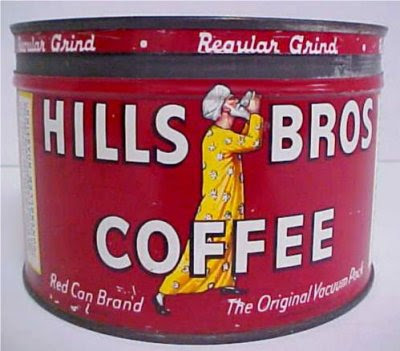
Of course, there were standards. In our part of Alaska, coffee meant Hills Bros. If Betty served something else, everyone would still drink it gratefully, but it would certainly be discussed. Coffee could generate more conversation than differences in religion. In a town where you could still hear Norwegian spoken on the streets, coffee sometimes seemed like our national beverage. Admittedly, Ketchikan also had far more bars than churches, but that’s another story.
We Still Meet Over Coffee
That social role of coffee never disappeared. In many parts of the world, you don’t begin a business meeting with business. First comes coffee. You make introductions, ask about family, talk about where you are from, and get to know one another. Then you conduct business.
We Americans have made the process more efficient. We pick up a paper cup from the espresso bar, carry it into a conference room, open the laptop, and get right to work. We’ve kept the coffee, but perhaps we’ve lost a little of the ritual.
Still, coffee shops are thriving, while alcohol use, particularly among younger adults, has been declining. For generations in America, meeting someone often meant, “Let’s get a drink.” Increasingly, that drink might be coffee. From a health standpoint, replacing some alcohol with coffee is probably a pretty good trade: a healthier drink and a brighter mind.
Even first dates now happen over coffee. Some people think a proper first date should involve dinner, but I’m not convinced. If I’m going to spend two hours discovering whether I like someone, wouldn’t I rather find out after they’ve occupied a few of their adenosine receptors? Give them an espresso, and let’s hear their interpretation of Hume.
What Coffee Does to Your Brain
Which brings us to caffeine. Caffeine doesn’t actually give you energy. Instead, it blocks receptors for adenosine, a chemical involved in the feeling of sleep pressure. As you’ve been awake longer, adenosine signaling helps tell your brain that you’re tired. Caffeine interferes with that message, which is why you feel more alert.
My first scientific encounter with caffeine wasn’t coffee at all. In the organic chemistry laboratory at the University of Chicago, we isolated caffeine from tea by brewing what may have been the world’s strongest cup. It looked completely undrinkable, which was fine because we weren’t making afternoon tea; we were doing chemistry.
Years later, my friend Simon Majumdar introduced me to proper British builder’s tea. Suddenly, I understood the British a little better. Builder’s tea is one step removed from containing enough caffeine to keep you awake through one of my podcasts.
Do You Really Have to Wait 90 Minutes?
You may have heard the popular claim that you should wait 90 minutes after waking before drinking coffee because of cortisol. There is a little real physiology behind the claim. Caffeine can temporarily increase cortisol, and cortisol normally changes around the time we wake up.
However, that doesn’t prove the 90-minute rule. People who regularly consume caffeine develop substantial tolerance to some of its cortisol effects, and we don’t have clinical trials showing that people who wait exactly 90 minutes have better health, better sleep, or better alertness.
This is an important lesson that goes well beyond coffee. A biological mechanism is not automatically a medical rule. If waiting 90 minutes makes you feel better, then wait. If you’ve been drinking coffee shortly after waking for thirty years, sleep well, and enjoy your morning cup, there isn’t good evidence that you need to stand beside the coffee maker holding a stopwatch.
Coffee Is More Than Caffeine
For years, medicine tended to think about coffee mainly in terms of caffeine. Caffeine stimulates us and can temporarily increase blood pressure, so it seemed reasonable to worry that coffee might be bad for the heart. Then researchers began looking at what actually happened to people who drank coffee over many years, and the story became much more interesting.
Coffee contains hundreds of compounds, including chlorogenic acids, which are polyphenols. It also contains other compounds created or changed during roasting. In other words, coffee isn’t simply caffeine dissolved in brown water.
Large observational studies have found that moderate coffee consumption is associated with lower rates of several health problems, including type 2 diabetes and cardiovascular disease. Some of the most consistent findings involve the liver, where coffee drinking has been associated with lower risks of chronic liver disease, cirrhosis, and liver cancer.
Interestingly, some health associations also appear in people who drink decaffeinated coffee. That tells us caffeine cannot be the entire story. Of course, these studies don’t prove that coffee prevents disease, and coffee isn’t medicine. But they certainly make the old idea that coffee must be bad for us much harder to defend.
How You Make Coffee Matters
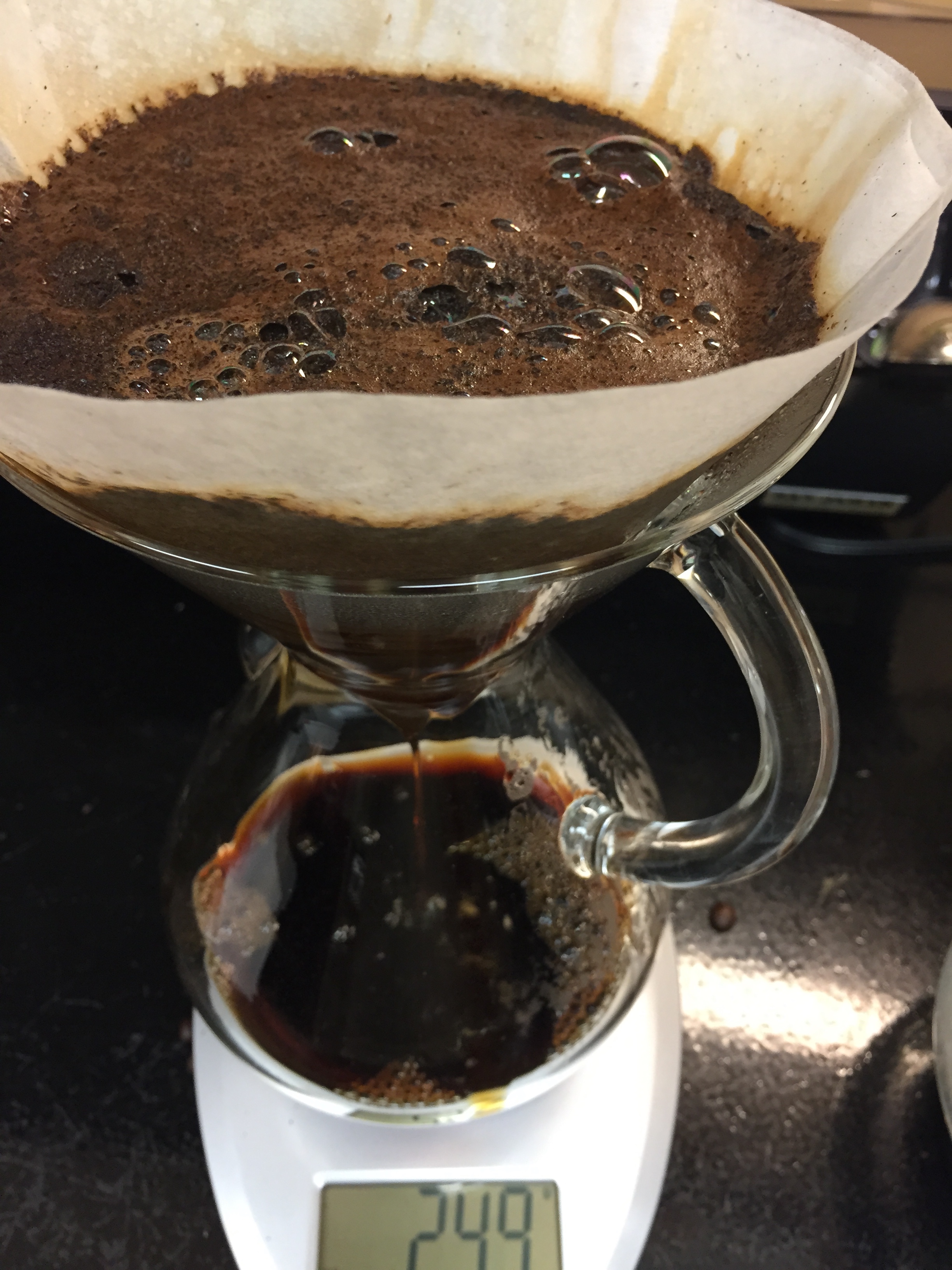
The classic coffee maker has not changed since originally invented in 1941.
Even the way we brew coffee changes what ends up in the cup. Coffee contains compounds called cafestol and kahweol, and cafestol can raise LDL cholesterol. Boiled and unfiltered coffee retains more of these compounds, while a paper filter removes many of them.
That makes a simple invention from 1908 surprisingly important. A German woman named Melitta Bentz wanted a cleaner cup of coffee without grounds and began experimenting with paper filtration. More than a century later, we know that her filter didn’t just change the taste and texture of coffee; it changed its chemistry.
The Chemex, introduced in 1941, took paper filtration and turned it into an object that looks as though someone walked out of a chemistry laboratory and decided the glassware would make a lovely coffee pot. As someone who spent time in chemistry labs, I approve.
Meanwhile, Italians went another direction. The early espresso machines arrived around the turn of the twentieth century, the Bialetti Moka Express appeared in 1933, and later machines gave us the pressure and crema we associate with modern espresso. Americans largely decided that what coffee really needed was a bigger cup and someone in a diner who would keep refilling it until you surrendered.
Why We Drink It
I have been drinking coffee for most of my life. Since about 1995, my first cup has usually been Peet’s Major Dickason’s Blend, and since 2005, most of those cups have been made by a Jura. I’m now on my second machine, so between them, they have probably made tens of thousands of cups.
For years, I also traveled with an AeroPress because I was willing to trust a hotel with my bed, towels, and the structural integrity of the building, but apparently not with my morning coffee. Today, I even have a Nespresso machine in my bedroom because some mornings I would rather stay there, drink coffee, and read for another half hour before civilization requires my participation.
But I don’t drink coffee because of chlorogenic acids, and neither did my mother. The women sitting around those kitchen tables in Ketchikan weren’t discussing polyphenols. The Swedes weren’t measuring cortisol during fika, and the people in the old coffeehouses weren’t worrying about whether 90 minutes had passed since they woke up.
They drank coffee because it tasted good, because it helped them wake up, and because someone else was often sitting across the table.
When the rain was blowing sideways in Ketchikan, there was Betty’s house. There was coffee. And there was someone to talk to.
Bread gave civilization calories. Beans gave it protein. Olive oil gave it light. Coffee gave civilization a reason to sit down together—and enough caffeine to get back up again.
Coffee woke civilization.
