
Why GLP-1 Made Me Love Food More—Not Less
From beetroot pasta to backyard salsa, this wasn’t about eating less. It was about finally tasting more.
I want to tell you about two people on a GLP-1.
First, there’s me.
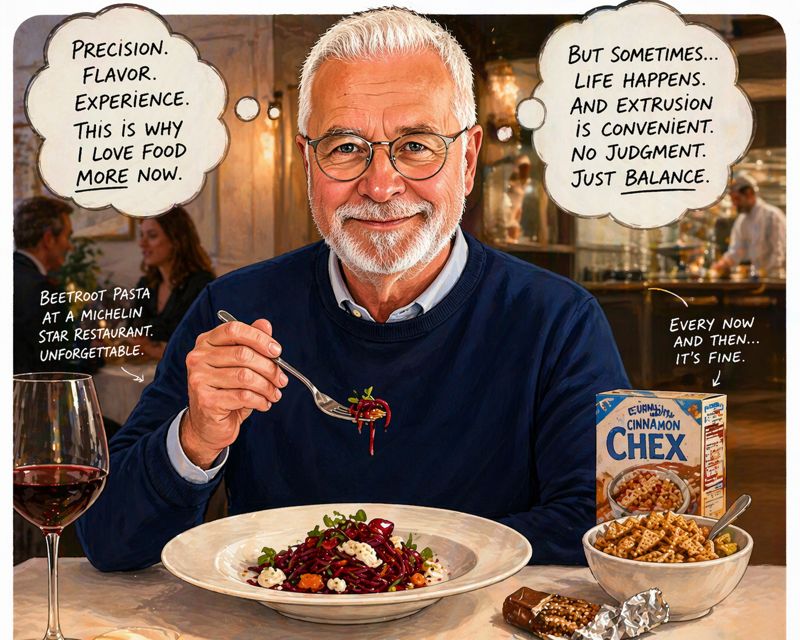
I’ve been on a maintenance dose—7.5 mg of Zepbound—for a while now. And recently, I went to an incredible Michelin-star restaurant. Now, at one point during that meal, I said something that surprised even me.
The beetroot pasta was one of the best dishes I had ever tasted.
Now, let’s pause there—because this matters.
I don’t like beets.
In fact, I’ve always said I hate beets.
And yet, there I was, enjoying beetroot pasta.
So what changed?
Well, not my opinion of beets.
But absolutely my appreciation of flavor.
Then, Something Unexpected Happened
During that same trip to Italy, I had one remarkable meal after another. For example, I ate at Ristorante Aroma, right next to the Colosseum. Then, I found a small, unforgettable place tucked away in Venice.

Now, let me be clear—this is not a humble brag.
Yes, the restaurants were fantastic. Yes, the trip was memorable.
However, I’ve been to Europe before.
And yet, this time was different.
Because this time, I didn’t just eat the food.
Instead, I tasted it.
Moreover, I slowed down.
In addition, I noticed the precision.
And perhaps most importantly, I appreciated the flavors.
Before, I think I liked good food.
Now, I actually understand it.
But Then There’s My Friend
On the other hand, there’s my friend.
He’s also on a GLP-1. In fact, he weighs a bit less than I do. However, he told me something that stopped me in my tracks.
“I don’t enjoy food anymore.”
Now, that’s not discipline.
And it’s certainly not success.
Instead, that’s anhedonia.
In his case, the dose was too high. As a result, appetite didn’t just quiet down—it disappeared. Furthermore, dehydration crept in. And on top of that, nutrition slipped just a bit.
Consequently, food wasn’t enjoyable anymore.
It was just… there.
So, we made a small adjustment.
We lowered the dose.
Now, yes, that can feel frightening. Naturally, people worry:
“If I lower it, I’ll gain the weight back.”
However, that didn’t happen.
Instead, what came back was enjoyment.
And Then There’s the Protein Bar Problem
Now, let’s shift gears—because this is where things get interesting.
Every now and then, you need a snack. That’s normal. That’s life.
However, when it comes to protein bars, I have to be honest.
Most of them don’t taste like food.
Instead, they taste like wet sawdust. Or, perhaps more accurately, dry particle board with a chocolate label slapped on it.
Yes, they try. They add peanut butter flavor. They add cocoa.
But still, the texture is off. The taste is off. And ultimately, your brain knows it.
Now, to be fair, I do like some Aloha bars. They’re better than most.
But even then…
Recently, I skipped the bar.
Instead, I had something entirely different:
Tocino.
A few bites.
That’s all.
And yet, those few bites delivered something protein bars rarely do:
Flavor.
Real flavor.
Not engineered. Not simulated. Not “chocolate-adjacent.”
Actual spices. Actual cooking. Actual food.
And, frankly, it was fantastic.
Meanwhile… the $32 Steak Snack
Of course, I also tried one of those dried carnivore steak snacks.
Thirty-two dollars.
And honestly?
Awful.
Dry. Chewy. Completely joyless.
At that point, you’re not eating—you’re making a statement to someone online.
Instead, you’d be far better off flying to Spain and enjoying some
Jamón Ibérico.
Because then, at least, you get flavor. And culture. And an experience.
Now, Let’s Talk About Breakfast
Most mornings, I have a smoothie.
And it works.
Specifically, I use oat milk, protein powder—this week I’m trying Ora pea protein—along with cocoa, coffee, blueberries, and a bit of banana.
It’s quick. It’s consistent. And importantly, it fits into life.
Especially when you’re stuck in California traffic.
In fact, traffic moves so slowly here that I didn’t even have to get out of the car to move a snail off the road—he made it across before I got there.
So yes, smoothies make sense.
However, When I’m Home…
Things change.
Now, there’s nothing wrong with a bowl of Cinnamon Chex.
It’s fine.
But often, I want something more.
So instead, I make:
- Poached eggs
- A splash of Louisiana Hot Sauce
- Pico de gallo
- Fresh tortillas
- Beans
And, of course, real salsa.
Not the jarred kind.
Instead, the kind that takes an afternoon to make. The kind that improves overnight. The kind your neighbor brings over—and yes, you briefly consider paying her to keep making it, before realizing that might get a little awkward.
So What’s Going On Here?
At this point, you might think this is about “good food” versus “bad food.”
But it’s not.
Instead, it’s about awareness.
Because much of what we eat today comes from a system designed for convenience.
For example, extrusion—the process that creates cereals, protein bars, and many snack foods—makes food:
- Shelf-stable
- Affordable
- Easy to eat
And importantly, easy to overeat.
Because when food requires no effort…
You don’t stop.
But Here’s the Key Point
There is nothing wrong with food.
Not with cereal. Not with protein bars. Not with convenience.
However, GLP-1 changes something fundamental.
It changes you.
Specifically, it allows you—sometimes even forces you—to slow down.
And because of that, you begin to:
- Notice flavor
- Take your time
- Actually enjoy what you eat
Before, I was filling my mouth before thinking.
And I was swallowing before experiencing.
Now?
I taste.
And That Changes Everything
Because now, I can enjoy:
- The precision of fine dining
- The bold flavors of the Philippines
- The chunky salsa from my neighbor’s kitchen
And suddenly, eating less becomes… more.
More experience.
More appreciation.
More enjoyment.
One Last Thing
There’s nothing wrong with Cinnamon Chex.
But it’s not a morning habit anymore.
Instead, it’s an every-now-and-then food.
It’s interesting.
But it’s not better.
Because once you start tasting food the way it’s meant to be tasted…
You don’t go back to eating it the way you used to.
