
Bread Built Civilization
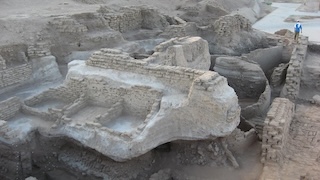
Excavation area at Tell Edfu shows superimposed settlement layers dating to various phases, with some silos of the 17th Dynasty (ca. 1650-1520 BC) covered by a thick ash layer on top into which several storage compartments were built.
For years, bread has been the villain of social media.
Scroll for a few minutes, and you’ll find someone telling you bread causes obesity, diabetes, inflammation, or that humans were never meant to eat it.
History tells a different story.
Bread didn’t weaken civilization.
Bread helped build it.
From Grass to Greatness
Imagine the first person who looked at wild grass and wondered whether those tiny seeds could become food.
Nobody knows exactly how bread was invented. Maybe someone mixed crushed grain with water and left it in the sun. Maybe wild yeast landed in the mixture, and it began to bubble. Maybe someone cooked it on a hot rock beside a fire.
Whatever happened, one thing is certain.
Someone noticed something new and tried it again.
That’s how science often begins—with curiosity.
Bread Changed Everything
Once people learned how to make bread, life changed.
Grain could be stored for months. Families no longer had to search for food every day. Villages grew into towns, and towns became cities.
Soon, people could become bakers, builders, teachers, physicians, and merchants because someone else was growing wheat.
Bread didn’t just feed people.
It helped create civilization.
Bread Fed Empires
The ancient Egyptians depended on bread. Grain storage helped feed the workers who built the pyramids. The Romans knew that keeping bread available helped keep peace in the city. Even today, archaeologists find bakeries and loaves of bread preserved in Pompeii.
Later, during the Klondike Gold Rush, my grandfather carried a sourdough starter into Alaska. Thousands of prospectors did the same. That’s why experienced miners became known as “Sourdoughs.”
Bread traveled wherever people went.
Then Bread Changed
Over time, bread changed.
Factories made bread softer, whiter, and able to last longer on grocery store shelves. It became convenient, but much of what made bread special disappeared.
Then, during the 1960s and 1970s, people began baking bread at home again. Books like The Tassajara Bread Book encouraged Americans to rediscover whole grains, sourdough, and fresh bread.
Sometimes progress means remembering what we forgot.
What Does the Science Say?
Not all bread is the same.
Whole-grain bread contains fiber, vitamins, minerals, and plant compounds that refined white bread often lacks.
Study after study has found that people who eat more whole grains tend to have lower rates of heart disease, type 2 diabetes, obesity, and colorectal cancer. That’s one reason whole grains remain an important part of the Mediterranean diet.
The question isn’t whether bread is healthy.
The question is:
Which bread?
Keep It Simple
One of the simplest meals is still one of the best.
Take a slice of whole-grain bread, add good extra-virgin olive oil, and enjoy it with a bowl of soup or a Mediterranean meal. It doesn’t need to be complicated.
Some foods have survived for thousands of years for a reason.
Bread is one of them.
This week in my Substack, I dive much deeper into the history of bread, how it helped build civilization, why whole grains continue to be recommended by nutrition research, and why bread has become one of the most misunderstood foods on social media.
You can read the full article on drsimpson.com, and if you’re looking for Mediterranean recipes—including homemade bread, soups, and healthy meals—you’ll find them at terrysimpson.com.
